A Letter to the Family
To my brothers, to my mother, to Kelley, to Greta, and to every Long, Perry, Swift, Coffin, Folger, Wall, and connected family member who finds this page:
This archive exists because it had to.
It didn’t start as a website. It started as a question that had been waiting since Dad died: where do we come from?
Dad died in 2020. He was sixty-eight. He never saw any of this. He never knew about the Mayflower passengers or the Coffin dynasty or what Mom’s side carried all the way back to Nantucket and the Mayflower. He never knew Benjamin Franklin was a cousin. He passed the bar and raised three sons and did the work without fanfare, the way Longs always have. This project started because someone needed to know what he carried without knowing he carried it.
Not in the sentimental way people ask it at holidays. In the real way. The kind of question that keeps you up at night once you start pulling the thread.
The thread didn’t stop.
It went back through Fall River, where Grandpa Long served twenty-four years in the State House and kept letters from the Kennedys in a drawer like they were phone bills. It went back through Cape Cod, where the Swift and Perryfamilies built lives on land they’d been working since the 1600s. It went back through Nantucket, where it turned out that our ancestors didn’t just visit that island. They purchased it. For thirty pounds and two beaver hats. And then they built it into the whaling capital of the world.
It went back through Peter Folger, a poet and interpreter who bought his wife Mary Morrill’s freedom from indentured servitude for twenty pounds, who learned to speak the Wampanoag language, who was jailed for standing up for the common people. His youngest daughter became the mother of Benjamin Franklin. He’s our 10th great-grandfather. Franklin is our 1st cousin, eleven times removed.
It went back through the Coffin family, whose line reaches to a general at the Battle of Hastings in 1066. Nine hundred and sixty years. One unbroken chain, documented name by name, generation by generation. They held a manor in Devon for nine centuries. They produced knights and members of Parliament. One of them served as Master of the Horse to Anne Boleyn. When the Revolution came, the family split. One branch produced Loyalist generals who fought at Bunker Hill. The other produced Quaker abolitionists who sheltered fugitives on the Underground Railroad. Lucretia Coffin Mott, the woman who stood at Seneca Falls and demanded equal rights, is our cousin through two independent lines.
It went back through four passengers on the Mayflower. Not as distant connections. As direct ancestors. Francis Cooke, Richard Warren, Degory Priest, George Soule. One hundred people on that ship, and four of them are in our straight line.
The founder of Folgers Coffee is our cousin. The co-founder of General Electric is our cousin. The founder of Macy’s department store descends from the same Thomas Macy who helped purchase Nantucket alongside our Tristram Coffin. Herman Melville named the character Starbuck in Moby-Dick after the Nantucket Starbucks. The Starbucks married into the Coffins, who are in our direct line. Abigail Folger, the heiress murdered alongside Sharon Tate at Cielo Drive in 1969, descends from the same Peter Folger who is our ancestor. The thread connects beauty and tragedy, founding and loss, across centuries.
And then there’s the Irish side. Long, Sullivan, Daley, Coogan, Wall, Kennedy, Thornton, Gumbleton, Harrington, McCoy, Connolly, Manion, Carrabine. Every one of them crossed the Atlantic during or after the Great Famine with nothing but stubbornness and the willingness to start over. They had no manors, no coats of arms, no letters after their names. They had grit. And they married into the old colonial families, which is why our tree carries both. The families who were here before the nation existed, and the families who arrived with nothing and built everything from scratch.
That combination is who we are. That’s the Long family.
We are the family that shows up. Not for recognition. Not for applause. Grandpa Long served twenty-four years and most people outside Fall River never heard his name. Dad passed the bar and raised three sons and never once talked about the Mayflower. The Kennedy letters sat in a drawer. The genealogy was passed down quietly, generation to generation, the way families pass down recipes and habits and stubbornness.
This is not the first time someone in this family has done this research. This archive builds on work done by other hands, using records that didn’t exist in one place before now. The Parkman Genealogy, which documents the Coffin line, was compiled in another century. FamilySearch, which holds millions of records, was built by people who believed every family deserves to know where it comes from. This archive is one more contribution to a project that started long before any of us were born and will continue long after we’re gone.
Something about how this was built. The steward behind it is not a historian. Not an academic. A real estate broker and a builder who read through books, visited the FamilySearch Library in Salt Lake City, spent hours on Nantucket genealogy websites, and cross-referenced thousands of records across FamilySearch, the Parkman Genealogy, and primary source documents. Built the same way everything gets built around here: obsessively, at full speed, at two in the morning, because once the thread started it wouldn’t stop. If it reads like someone who cares too much, that’s because I do.
This archive is maintained from Tiverton, Rhode Island, on land once governed by the Pocasset sachem Weetamoo, whose story is part of this archive too. The steward lives thirty miles from the island our ancestors purchased. The harbor out the window is the same water that carried the whaling ships, the same water that Tristram Coffin crossed when he sailed from Boston to Nantucket. The geography of this family is the geography of New England itself.
There are summer nights at Westport Point, when the whole family is together and the sun is going down over the harbor and the kids are barefoot on the grass. You look around and you think: the people standing here have no idea. No idea that the water in front of them carried whaling ships crewed by our ancestors. No idea that thirty miles south, on an island you can almost see on a clear day, our family purchased the land and built the town. No idea that the letters in a drawer upstairs were signed “Jack.” This was built so they’d know.
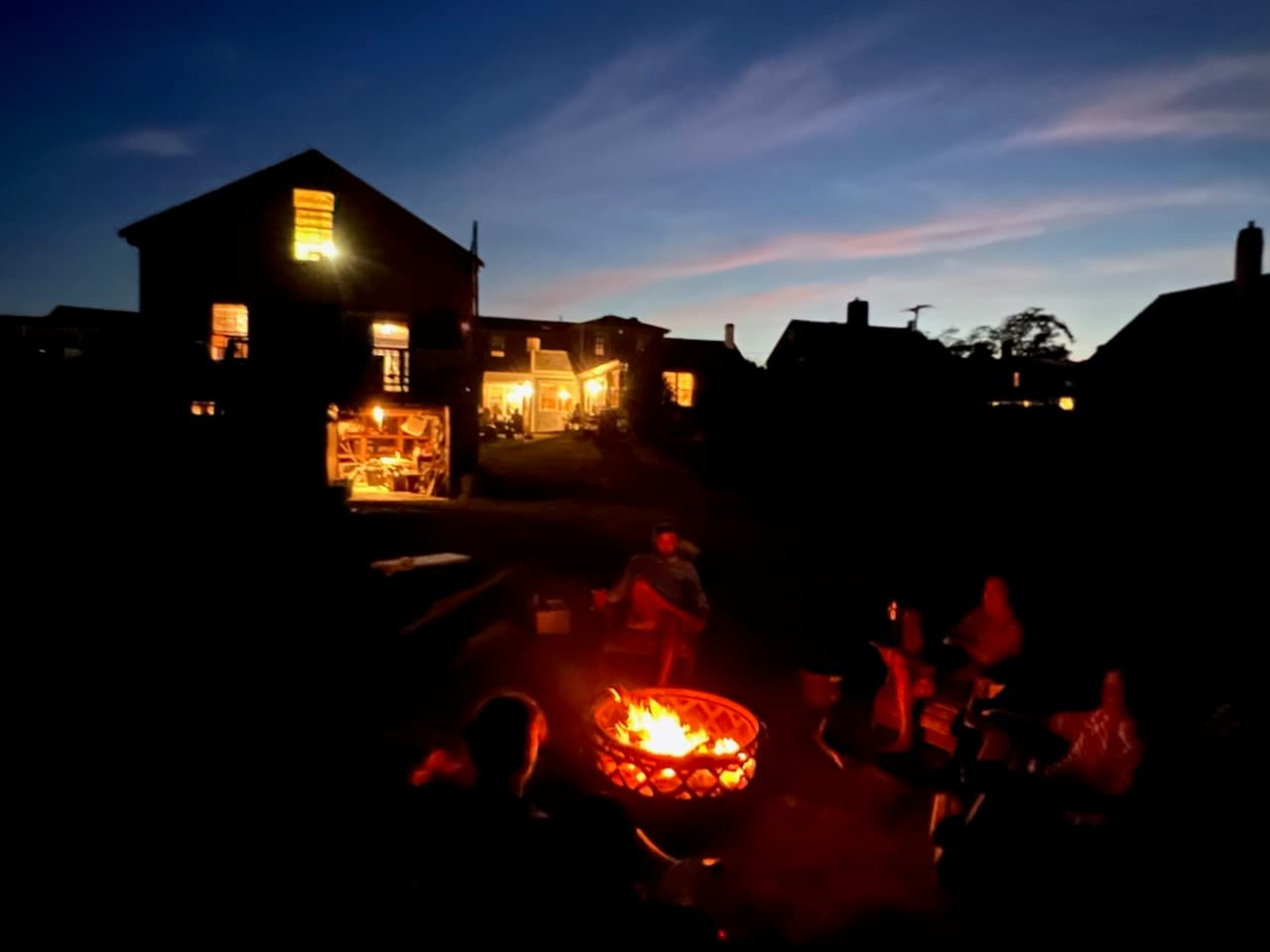
The thread doesn’t stop here. It runs through Perry and Charlie and Tommy. It runs through Patrick and Elyse and Frankie. It runs through Greta. It runs through every child born into these families from this point forward. This archive is for them. It is for the generation that asks the same question, where do we come from, and deserves an answer that doesn’t start with “maybe” or “someone once told me.” It starts with names, dates, documents, and a chain of descent stretching back nearly a thousand years.
We come from people who purchased islands and people who were purchased. From generals and abolitionists. From poets who were jailed and admirals who were knighted. From Irish immigrants who arrived with nothing and Norman knights who were granted manors. From Quakers who followed their conscience and Loyalists who followed their king. From a family that was divided by a revolution and reunited by a marriage and a house that still stands on Nantucket today.
Dad would never have built something like this. He would have said it was too much, that nobody needs to know all this, that the important thing is to do the work and let it speak for itself. He would have been wrong. He would have read every page, though.
Tiverton, Rhode Island
2026